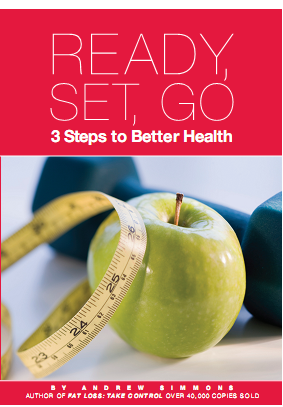
Scrap the diet and get some discipline

Discipline is the bridge between goals and accomplishment. To accomplish your fitness goals, what you need, before anything else, is the self belief and the will power to see yourself through to the end. Training is hard and achieving the perfect body and level of fitness is a fulltime commitment. Results don’t come over night, and even when they do come, it takes a massive amount of long-lasting commitment to see continued results. Fitness is a process which takes time and it most certainly doesn’t come without discipline.

The internet is full of fad diets and promises that you can lose weight by doing virtually nothing at all. But in reality this couldn’t be further from the truth. It’s not about starvation diets or tricking your body. It’s about continued discipline. The only way to lose weight and get fit is to stop with the excuses. Stop saying ‘I’m too tired’, ‘I’m too stressed’, ‘I don’t have the time’. Exercise is tough both mentally and physically. It’s a challenge on the entire body. Realising this, and making the effort to discipline yourself and push through, even when the results seem fleeting, is what will get you there in the end – nothing else.

Can the Fitness Industry Survive?

“Economic crisis, global credit crunch, financial catastrophe, potentially the worst recession of our lifetime, market meltdown”.

These are just some of the phrases used during the GFC by the media and “experts” to describe the state of economy. Whilst we should treat this situation seriously, and tackle it head on, unfortunately headlines like these instill unnecessary fear in the minds of many people, including both clients and fitness professionals. In a recent article in Business Review Weekly (BRW) it was suggested that consumer spending on fitness will halve in this new financial year. Similarly an article on domestic budgeting in the Herald newspaper in New Zealand recommended people to “give up the gym membership” as a way to reduce household spending.

During a presentation I gave at the 2008 National Franchising Convention in Sydney, I was asked what impact I thought that the “Economic Crisis” would have on the Fitness Industry. My response was straight forward. “It will sort out the men from the boys. It will establish which clients / gym members truly value the level of service provided by their personal trainers and / or other fitness providers and those who do not. If clients do not receive outstanding service, they will use the ‘economic situation’ as a convenient excuse to either cancel their gym membership and / or terminate the services of their personal trainer”.

Recently one of our Franchise Owners at Vision Personal Training was confronted with such a situation. A client, spooked by what she read in a paper, suggested that she needed to cease training due to the economic downturn. When asked how it has impacted her, she indicated that she only wanted to use the money to pay off her mortgage. After the Franchise Owner pointed out that interest rates had actually fallen significantly as a result of the crisis, leaving more money in her bank account at month’s end, and established that her job situation was not affected at all, she ‘came clean’ and confessed that the real reason for wishing to cease training was that she felt de-motivated by a lack of goal setting provided by her trainer. Subsequently, the franchise owner was able to help her establish some more compelling goals which lead to her actually choosing to increase the amount of Personal Training that she does at the studio.

The Australian Fitness market is still relatively immature and untapped. Our society is more deconditioned and stressed out than ever before, meaning that our services have never been more needed. However, unfortunately like many clients make excuses for their failures, I have recently heard many fitness professionals too use the “credit crunch” as the excuse for their lack of their success.

I believe that a fitness professional’s success is largely determined by their self belief during such times. In my opinion, it is professionally unacceptable to allow most clients stop exercising during times. As previously mentioned, they need it now more than ever, as I see healthy eating, exercise and personal training as a necessity not a luxury. Those who view it as a luxury will unfortunately allow themselves to be swept up by all of the media hype.

The opportunity for success even in this climate is made apparent by number of large overseas fitness chains that already have or are planning on entering the Australian market within the next 5 years. I believe that the landscape of the fitness industry in Australia will change dramatically shortly. I don’t wish it was easier, I wish I was better. I am looking forward to tackling these times head on and forced to become better. By doing so, imagine how fast I can grow when we turn the economic corner once again. Those leaders who possess positive attitudes to these times, are committed to outstanding customer service and are focused on constant improvement, will rise to the top and achieve greatness in the most rewarding industry in the world. I can assure you that Vision Personal Training will be amongst them.

Junk Foods – What our kids are missing out on!

Today I was talking to a Vision Personal Training client about the state of her pantry. She suggested that she had to have junk foods in her cupboard so her kids wouldn’t “miss out”. That comment stopped me in my tracks. The only thing I thought her kids were missing out on is the opportunity to feel healthy and energetic, as a result of eating healthy foods. After the meeting, I paused for a few moments and reflected upon how different people associate entirely different meanings to certain situations. The concept of missing out was interpreted in an entirely different way by me, compared to the way my client did.

With obesity rates in Australia reaching epidemic proportions, I think it about time society really started to view the consumption of junk food differently. The sooner that fast food companies are prevented from advertising during childrens TV programs and the sooner they are prevented from associating their products with kids toys the better.

Is FaceBook turning you into a thief?

Everytime I hear about the expansion of FaceBook, thoughts of specticism flood my mind. I immediately wonder when people are using it. Is it during work hours or is it in their own time? After discussions with many people about this, I found that people frequently use FaceBook for personal reasons (not professional) during work hours. In my belief, this is a form of theft as they are being paid to work but in fact not doing so.

Well known Personal Development author Larry Wingett discusses this concept in his best selling book “It’s Called Work for a Reason“, a fantastic book about becoming more successful. He suggests that time stealing is no different to taking money out of the bosses bank account or cash register and I agree. This tendency to work on personal matters during work hours is not surprising, particularly as most Australians are unhappy in their jobs.

So why am I writing about this when my passion is really about improving the health of the nation you may ask. It is because I believe that many people who are unhappy in their jobs often turn to food, drugs and alcohol as forms of comfort or as a means of achieving happiness. As a result, their health is in jeopardy.

I am proud and fortunate enough to be able to say that I love what I do. I don’t feel like I have really worked since about 1992, when I switched from working in Accounting firm as a trainee accountant to “play” in the fitness industry. Hence, I don’t have the desire or need to turn to food, alcohol or drugs as a means of happiness. In fact I am proud to say that I have never taken drugs. 

To me surfing FaceBook for hours on end purely for personal reasons is a complete waste of time. Similarly, eating poorly quality food, drinking alcohol excessively or taking drugs simply prevents you from maximising your potential to achieve worthwhile goals.  My advice to those out there who are victims of these destructive behaviours is for them to find a career, sport and / hobby that ignites their passion. Once this is found, the need or desire to steal time from the boss or lead a destructive lifestyle will be a thing of the past.

Are you making your kids fat?

The 5 people who you spend most of your time with are commonly referred to as your “Circle of Influence”. It is often said that our beliefs, actions and results are greatly influenced by these people. As previously outlined, clients only spend approximately 1-2% of their week with a trainer; hence the people who spend more time with them are going to have an influence on their habits. We find that those clients, who have the support of their “circle”, have a much better chance of leading long-term healthy lifestyles. Put simply, if you hang around great people with high standards, you too will develop high standards.

Included in many people’s “Circle of Influence” is their children. In fact, a child’s greatest influence generally is their parents. Over the years, many people have asked me whether or not we would consider helping children. As I am sure you are aware, childhood obesity is a major problem in our society. My simple answer to that is, “We already do help children – indirectly”. I believe the best way to combat childhood obesity is by helping their parents to lead healthy lifestyles. No matter how much time we spend exercising a child, our influence is negligible compared to the influence of their parents. Our efforts would be useless without the support, encouragement and role modeling of their parents serving them the correct foods at home. On countless occasions, clients have told me stories of how their children have also lost weight and are more active as a result of ‘getting their own act together’.

“Where are you playing, above or below the line?”

As outlined below, those who lay blame or make excuses or live in denial about their current state we say play below the line. Living in denial or lying to yourself actually kills your hunger or drive to change. Hence there is no wonder why those people generally do not achieve any great success in their lives and play the role of victim. On the other hand, those who take ownership, accountability and responsibility for everything that happens in their lives play above the line and generally find success and claim victory.

How many times have you heard statements such as “I would eat well but my kids don’t like healthy food” or “I would eat healthy foods for lunch if there was a good café near work” or “If it wasn’t raining this morning I would have exercised for sure” or “It’s not my fault for being overweight” or “I don’t have good genes, I can’t do that”. These types of “below the line” comments destroy people’s ability to gain fulfillment, feel pride and build self esteem. Well known motivation speaker Anthony Robbins summed it up perfectly when he said “To suggest to yourself that you are no good or incapable of achieving greatness is an insult to our creator”. Discomfort should be seen as your friend; as something that may move you towards the life that you want.

I cannot believe how many times I hear people use age as their excuse for not maintaining their health. In my opinion, this excuse is a major contributing factor to ill health, chronic injury and premature death. Comments such as “My metabolism has slowed down now that I am in my 40’s or 50’s so maintaining my body shape is beyond my control”, “weight training is for young people”, When I was young I used to be fit. I deserve to kick my feet up”.

Whilst science has proven that our metabolism does slow down as we get older, it doesn’t mean that we should then give ourselves the license to drink and eat too much, sleep in and not exercise.

Does alcohol make you fat?

Many people unfortunately overlook the effects that drinking alcohol has on fat loss. So we thought the following information may be useful to know.

Alcohol is taken directly to the liver to be processed as soon as possible. At such time, any stored carbohydrates are no longer required as a fuel source so they are readily stored in the muscle cells and the liver. Alcohol yields 29kJ of energy per gram, which is almost two times higher than the energy value of one gram of carbohydrate (16kJ). Therefore, it may take the body almost twice as long to burn up the alcohol, which further delays the body’s ability to utilise its carbohydrate and fat stores.

Binge drinking may cause an oversupply of carbohydrates to be stored as fat, as carbohydrates often form the mixes in many alcoholic drinks. Bourbon and coke, Breezers, Stoli’s and beer are just a few of a number of well-known examples. One nip of a standard spirit contains approximately 10 grams of alcohol which equals almost 20 grams of carbohydrate, which is the same as the carbohydrate content in one potato, one apple and almost two slices of bread. If a can of coke is added to the nip (40 grams of carbohydrate), the entire drink would equal the carbohydrate contained in approximately 3 potatoes, 3 apples and almost 6 slices of bread. It is quite ironic that many people would not consider eating the quantities of these foods due to their energy composition but would easily consume these drinks.

Whilst we do not suggest that people consume alcohol, we suggest that people use water or diet soft drinks as the mixer when drinking spirits and choose low-alcohol varieties when drinking beer.

We also suggest that people be aware of the foods consumed in the hours prior to and while drinking to ensure that their carbohydrate and fat contents are not too high. Further, people should be aware of the foods eaten on the days following a drinking session, as higher than normal carbohydrate consumption may easily lead to fat gain. A low to moderate exercise session may be useful on the day after consuming alcohol to utilise the oversupply of energy. However, exercising, when dehydrated, is not recommended.